Make your project work in Arabic.
Working from the United Arab Emirates, Thaer Hasan translates English into Arabic and writes, adapts and reviews Arabic for websites, campaigns, corporate content and executive communications, deciding what each section needs so the Arabic reads as if it began in Arabic rather than being translated into it.
At a glance
Thaer Hasan is an Arabisation and Arabic communications specialist based in the United Arab Emirates. He works in Arabic and English across website Arabisation, marketing and campaign Arabisation, corporate content, original Arabic writing and ghostwriting, and editorial review of existing or AI-generated Arabic.
- Based in
- United Arab Emirates, working with Gulf and international clients
- Languages
- Arabic and English
- Works on
- Websites, campaigns, corporate content, press releases, op-eds and executive thought leadership
- Background
- Corporate communications in the UAE, diplomatic translation in Istanbul, MSc from the University of Oxford and an MBA from GTU
What Arabisation means
Arabisation is the process of making communication work properly in Arabic. It considers not only what the source says, but what the communication is meant to achieve, who it is for, how the Arabic should sound and how the complete project works together.
It may begin with an English source, existing Arabic, AI-generated content or simply a brief. Depending on what the project needs, the right treatment may be translation, adaptation, rewriting, restructuring, editing or original Arabic writing.
Arabic translation is part of this work. Thaer provides English-to-Arabic translation wherever close translation is the right treatment, alongside adaptation, rewriting, editing and original Arabic writing where the content needs more than translation.
Translation asks whether the source has been carried into Arabic accurately.
Arabisation asks whether the Arabic works as communication.
The Arabisation Framework
Communication
Purpose · Audience · Context
What should the communication achieve, who needs to receive it and where will it appear?
Arabic
Meaning · Expression · Voice
Is the substance right, does it read naturally in Arabic and does it sound like the right person or organisation?
Project
Structure · Terminology · Coherence
Are the parts organised properly, are language decisions consistent and does the complete body of content hold together?
The final question is the same at every level: does it work in Arabic?
One brief, several answers
- ترجمة
- Translation
- تكييف
- Adaptation
- إعادة صياغة
- Rewriting
- كتابة أصلية
- Original Arabic writing
Work published in


The difference, line by line
Translation carries meaning from a source into Arabic. Arabisation asks what the complete communication needs in order to work in Arabic. A project may need close translation in one section and adaptation, rewriting or original writing in another.
Carry the source meaning accurately into Arabic.
Make the communication achieve its purpose in Arabic.
The source text and the meaning it carries.
The purpose of the communication and what the Arabic needs to do.
Accuracy and quality in relation to the source.
Whether the Arabic is accurate, natural and effective in its intended context.
Meaning, terminology, language and the requirements of the source and target text.
Purpose, audience, context, meaning, expression, voice, structure, terminology and coherence across the project.
When the source can be carried into Arabic effectively without substantial changes to its structure, voice or approach.
When the Arabic needs decisions beyond close translation, or when the work begins from existing Arabic, AI-generated content, a brief or a wider project.
Why accurate translation may still fail
A translation can carry the source accurately and the resulting Arabic can still fall short as communication, because accuracy and effectiveness are not always the same measure.
A sentence can be rendered faithfully and still land as stiff, imported or oddly formal, because English structures, references and rhythm rarely survive a direct crossing. Marketing lines lose their point, corporate English becomes heavy and evasive, and headlines that were built to be short stop being short.
Readers notice this quickly. Nothing is technically wrong, yet the content feels imported, and that judgement attaches to the organisation behind it rather than to the text. The fix is not a better sentence. It is a decision, taken section by section, about what the Arabic needs to do and how it should be built to do it.
Get in touch
احصل على اتصال
Word for word: it reads as “obtain a contact.”
تواصل معنا
What an Arabic reader would actually say.
What Thaer does
Six areas of work, often combined within a single project. Each one is explained in full on the services page.
Arabic writing and ghostwriting
Press releases, op-eds, features, executive commentary and thought leadership written in Arabic from the brief, not translated from an English draft.
Corporate and professional content
Announcements, profiles, reports, internal communications and professional documents that hold a consistent Arabic voice across an organisation.
Website and digital Arabisation
Pages, navigation, interface text, forms and metadata adapted so the Arabic site reads as its own site rather than a mirrored version of the English one.
Campaign and marketing Arabisation
Headlines, concepts, scripts and captions rebuilt for Arabic audiences, keeping the intent of the campaign when the wording cannot be carried across.
Arabic editing and quality review
A structured review of existing Arabic, whether it was translated, written in-house or generated by AI, covering accuracy, register, terminology and consistency.
Complete project Arabisation
Everything a project needs in Arabic, handled as one body of work with a single set of terminology and tone decisions applied throughout.
How Thaer works
Every project follows the same four stages, whether it is one op-ed or an entire website.
- 01
Understand the project
What the content is for, who it speaks to, where it appears and what response it should produce. This is also where the boundary between translation and original writing is agreed.
- 02
Set terminology and tone
Key terms, names, titles and register are decided once, before drafting, so that the same choices hold across every page and every piece.
- 03
Draft in Arabic
Translating, adapting, restructuring or writing from scratch as each section requires, with the Arabic reader in mind rather than the English sentence.
- 04
Review the whole project
A final editorial pass across everything together, checking accuracy, consistency, flow and whether the content does the job it was written to do.
Why work with Thaer
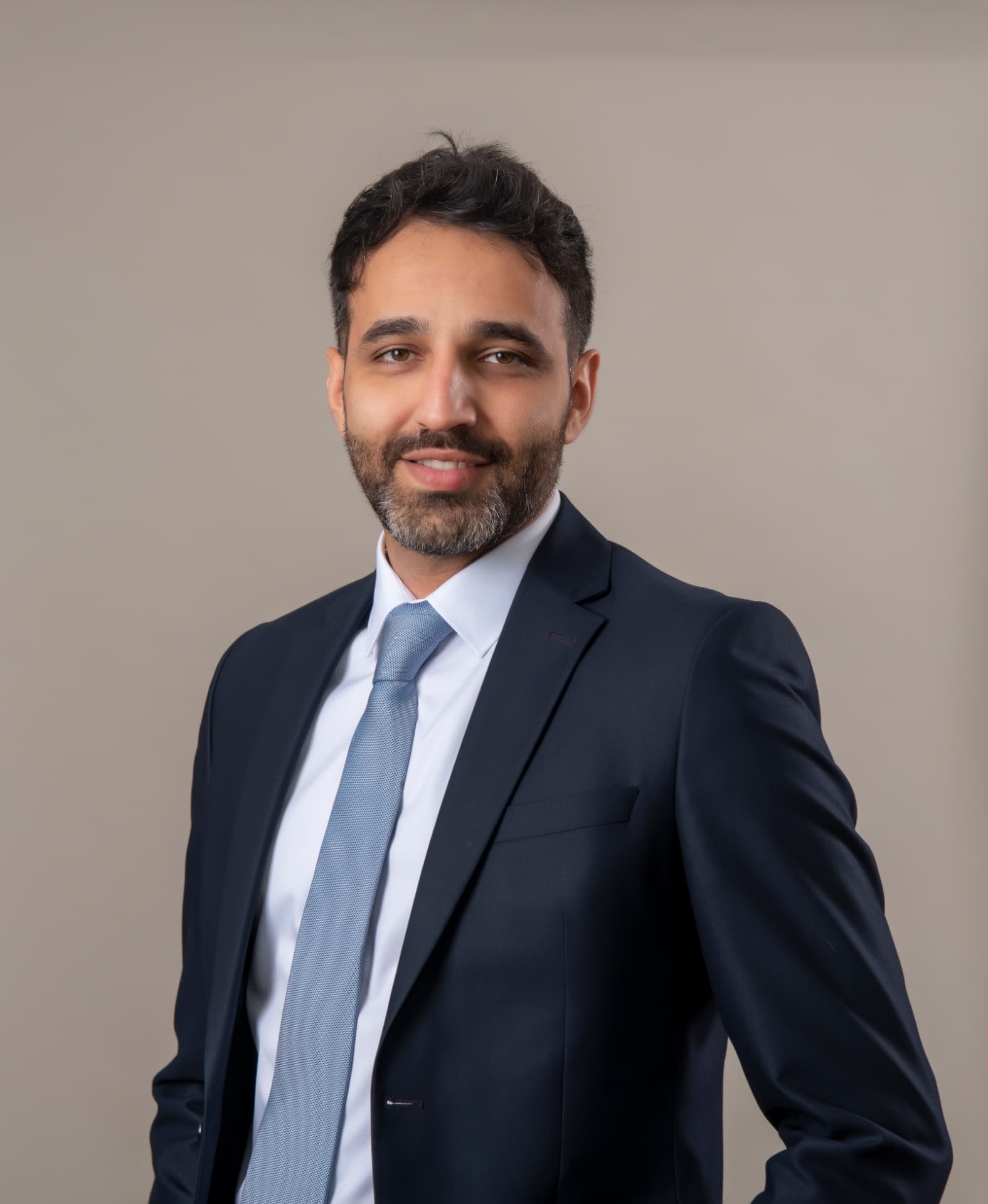
Thaer Hasan is an Arabisation and Arabic communications specialist based in the United Arab Emirates, working across translation, original Arabic writing and editorial review rather than only one of them.
His background is in corporate communications in the UAE, working with leading communications companies and marketing agencies. Earlier, he carried out official translation work supporting the UK, German and Brazilian diplomatic missions in Istanbul, where precision and discretion were the standard rather than the exception.
He holds a master’s degree in Major Programme Management from the University of Oxford and an MBA from GTU in Istanbul. Alongside Arabisation work, he advises ventures entering Gulf markets on communications and cultural positioning, which informs how he reads an audience.
Common questions
Discuss your project

Hi, I’m Thaer. Tell me what needs to work in Arabic.
A website to translate into Arabic, a campaign to adapt, corporate or executive content to write, or existing Arabic to review: tell me what the content is, who it is for and what you need in Arabic. If it is easier to send the material itself, attach it to an email and I will read it before replying.
- A short brief is enough to start
- Existing Arabic can be reviewed rather than replaced
- Work in English, Arabic or both